
How Did Allied Troops Hold the Line at Chipyong-ni?
At the Battle of Chipyong-ni, Allied soldiers were surrounded by a much larger Chinese force. Instead of running away, they dug in and fought back. With help from air strikes and supplies dropped by planes, they held their positions and eventually drove the enemy back.
Quick Facts
- The fighting lasted three days.
- They were surrounded on all sides.
- Air support was very important.
- The soldiers held their ground firmly.
- It stopped a large enemy attack.
Countries Involved
Historical Context
The Korean War began in June 1950 when North Korea attacked the South. By early 1951, the fighting moved back and forth across the border area. Both sides struggled for control of the rugged mountains and valleys. General Matthew Ridgway took command of the United Nations forces during this difficult time. He wanted his troops to stand and fight instead of always pulling back. The battle at Chipyong-ni was a major test of this new plan. Soldiers needed to prove that they could hold their ground against large enemy forces. This town was a key spot where several important roads met. Keeping it was vital to protecting the rest of the army nearby.
What Happened?
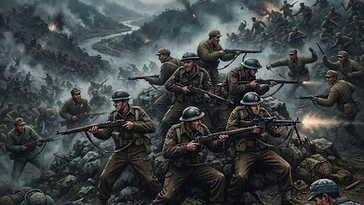
In February 1951, a large group of Chinese soldiers surrounded the town of Chipyong-ni. Inside the town, about 5,000 soldiers from the United States and France were trapped. The weather was very cold and the ground was covered in hard ice. When night fell, the Chinese army launched powerful waves of attacks against the perimeter. Soldiers from the U.S. 23rd Infantry Regiment and the French Battalion fought together closely. The noise of whistles, bugles, and gunfire filled the dark night air. The defenders used machine guns and artillery to keep the enemy away. During the day, American planes flew overhead to drop needed supplies like food and extra bullets. The soldiers stayed in their deep fighting holes to stay safe from the heavy fire. They were low on supplies but they refused to give up their positions. After three long days of intense fighting, the Chinese army realized they could not win. They finally stopped their attacks and began to move away from the area. This was the first time that United Nations troops stopped a major Chinese attack in the open field.
Why Did It Matter?
This battle proved that the Allied troops could beat the Chinese army in a stand-up fight. It helped change the momentum of the war.
Forces and Units Involved
Frequently Asked Questions
1Which military units fought during the battle at Chipyong-ni?
2How long did the troops have to hold the line during this battle?
3Did the freezing winter weather make the fighting more difficult?
4Why were the troops ordered to stay and fight instead of retreat?
5Did the troops run out of ammunition during the heavy fighting?
6Was the enemy force larger than the Allied troops at the site?
7Was the defense of Chipyong-ni considered a successful victory?
8How did the French battalion perform during the intense combat?
9What is meant by using air support during the Korean War?
10Where is the town of Chipyong-ni located in Korea?
Historical Sources
In February 1951, U.S. and French troops at Chipyong-ni were surrounded by Chinese forces during the Korean War. The U.S. 23rd Infantry Regiment held their ground against wave after wave of attacks. With help from air strikes and relief columns, they held out and turned back the Chinese advance.
Related Stories


What Happened to the Colombian Soldiers in the Korean War?
Discover the story of the Colombian soldiers who fought in the Korean War at the Battle of Hill 180.

What Happened at the Battle of the Imjin River?
Discover the heroic story of the Gloucestershire Regiment at the Imjin River during the Korean War.


What Happened at the Battle of Heartbreak Ridge?
The Battle of Heartbreak Ridge was a month-long, intense fight for a high hill in Korea that remains a symbol of the war's difficulty.
Share this story
Help Google know you want to see more military history from 10 Second War Stories in your search experience.