
Kim Hong-il
Who Was Kim Hong-il and How Did He Save the Han River Line?
Lieutenant General Kim Hong-il was a key South Korean commander during the early stages of the Korean War. In June 1950, as the commander of the Siheung Theater, he successfully led a six-day defensive operation at the Han River. His strategic use of delaying tactics allowed South Korean and UN forces to regroup, provided time for U.S. ground troops to arrive, and created a crucial turning point for the ROK-US combined operations.
Quick Facts
Who Was Kim Hong-il?
Lieutenant General Kim Hong-il was a distinguished military leader whose experience in the Chinese National Revolutionary Army proved vital during the early, chaotic days of the Korean War. Tasked with defending the Han River, he faced the daunting challenge of slowing a rapid North Korean advance.
Early Life
Born in 1898, Kim Hong-il served in the Chinese National Revolutionary Army from 1926 to 1948. His extensive military experience abroad prepared him for the leadership roles he would later assume in his home country.
Before the Event
Following the independence of South Korea, Kim returned to his homeland in 1948. He joined the newly formed Republic of Korea Army and served as the principal of the Korea Military Academy, applying his international military expertise to the development of the new nation's armed forces.
What Happened
In June 1950, following the outbreak of the Korean War, Kim was appointed commander of the Siheung Theater. As North Korean forces pushed south, Kim organized a defensive line along the Han River. For six critical days, his forces engaged in a series of delaying actions that successfully stalled the enemy's momentum.
Defining Moment
The defining moment of his command was the execution of the Han River defensive operation. By holding the line for six days, Kim provided the necessary time and space for U.S. ground troops to deploy and for General Douglas MacArthur to inspect the front lines, fundamentally altering the strategic landscape of the conflict.
Aftermath
Kim's delaying tactics became a foundational concept for ROK Army operations throughout the war, including the later defense of the Nakdong River. He continued to serve until his discharge as a lieutenant general in March 1951, later transitioning into a career as a diplomat and politician.
Later Life
After his military service, Kim Hong-il remained a prominent figure in South Korean public life, serving in various diplomatic and political capacities until his death in 1980.
Why It Matters
Kim's leadership at the Han River is historically significant as it represented the first successful recovery from early failures in the war. His ability to implement clear, strategic delaying tactics allowed the ROK and UN forces to establish a more sustainable defensive posture.
Lieutenant General Kim Hong-il was a South Korean commander who led a crucial six-day defense of the Han River in June 1950. His strategic delaying tactics successfully slowed the North Korean advance, allowing UN forces to regroup and U.S. troops to arrive, which proved vital for the war's early defense.
Frequently Asked Questions About Kim Hong-il
1What was Kim Hong-il's role in the Korean War?+
2Why was the Han River defense important?+
3What was Kim Hong-il's military background before the Korean War?+
Historical Sources
- [T2] Institute for Military History, Korea — "General Kim Hong-il and Han river defensive operation in early Korean war" (https://journal.kci.go.kr/imhc/archive/articleView?artiId=ART002113809), accessed 2026-10-24
- [T4] Wikipedia — "Kim Hong-il (general)" (https://en.wikipedia.org/wiki/Kim_Hong-il_(general)), accessed 2026-10-24
- [T4] NamuWiki — "Kim Hong-il (soldier)/Evaluation" (https://namu.wiki/w/%EA%B9%80%ED%99%8D%EC%9D%BC(%EA%B5%B0%EC%9D%B8)/%ED%8F%89%EA%B0%80), accessed 2026-10-24
Related Veteran Stories


Abdul Raziq
Who Was General Abdul Raziq and Why Was He a Key Figure in the War in Afghanistan?
Lieutenant General Abdul Raziq was a powerful and controversial Afghan police chief who played a critical role in securing Kandahar Province against the Taliban until his assassination in 2018.

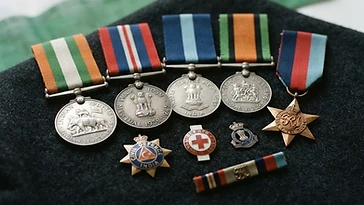
Amiya Nath Bose
Who Was Amiya Nath Bose and How Did He Campaign for Indian Independence During World War II?
Amiya Nath Bose was an Indian barrister and political activist who campaigned for Indian independence from within Britain during the Second World War.

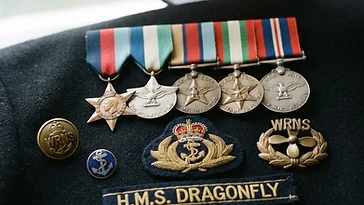
Betty Withers
Who Was Betty Withers and What Did She See Before D-Day?
Betty Withers was a WRNS cook stationed at Hayling Island who witnessed Eisenhower and Montgomery during top-secret D-Day preparations.
Related War Stories

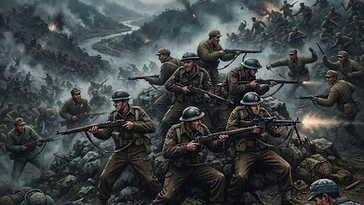
What Happened at the Battle of the Imjin River?
Discover the heroic story of the Gloucestershire Regiment at the Imjin River during the Korean War.


What Was Operation Chromite's Feint at Kunsan?
Operation Decoy used a fake landing to confuse the enemy during the Korean War, ensuring a successful surprise invasion elsewhere.


How Did the Battle of Inchon Change the Korean War?
The 1950 Battle of Inchon saw UN forces execute a brilliant surprise amphibious landing, recapturing Seoul and completely changing the outcome of the Korean War.
Related Library Entries
This was a civilian airplane that was shot down by the Soviet military. It was a major event that caused tension during the Cold War.
The Royal Australian Air Force is the air power for Australia. It has helped defend the country in many wars since it first started.


Explore More Veteran Stories
Real Stories. Real History. Never Forgotten.
Explore More Veteran StoriesShare this story
Help Google know you want to see more military history from 10 Second War Stories in your search experience.