
History
German Panzer Divisions were first created in the 1930s to change how wars were fought. By using groups of tanks working together with trucks and planes, they could move much faster than regular foot soldiers. This style of fighting was often called a lightning war.
When World War II started, these divisions helped Germany conquer large parts of Europe quickly. Their tanks were fast and their crews were well-trained to strike deep into enemy territory. They were very successful during the early years of the war because other armies were not prepared for such speed.
As the war went on, the Allied forces learned how to stop these tank attacks. The Panzer Divisions faced many supply shortages and had to fight against larger armies with more resources. By the end of the war, most of these divisions had been destroyed or were forced to surrender to the Allies.
Frequently Asked Questions
Notable Operations
Conflicts
Related Stories
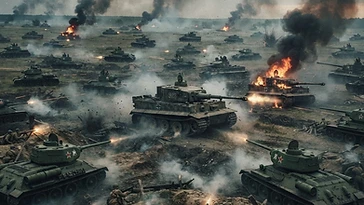
How Did the Tiger Tank Battle Shape Modern Warfare?
The Battle of Kursk stands as the largest tank battle ever, where the Soviet Union halted the German advance.

How Did Operation Husky Shock the Enemy in World War II?
Operation Husky was a brilliant and massive invasion of Sicily that helped the Allies gain a foothold in Europe and defeat the enemy.